
Classic Coq au Vin Recipe
If you’ve ever dreamed of making a French dish that’s both impressive and comforting, you’re going to love this Classic Coq au Vin Recipe. It’s rich, hearty, and packed with deep, layered flavors from tender chicken braised slowly in red wine with mushrooms, pearl onions, and bacon. Trust me, once you try this, it’ll become your go-to for cozy dinners or special family gatherings. So, grab a glass of wine (maybe the same you’ll cook with) and let’s get started!
Why This Recipe Works
- Balanced Flavor Profile: The blend of red wine, bacon, mushrooms, and fresh herbs creates a deeply satisfying, harmonious taste.
- Tender, Juicy Chicken: Slow braising locks in moisture and develops melt-in-your-mouth texture you’ll crave.
- Classic Techniques Made Simple: I walk you step-by-step to perfect the cooking process without feeling overwhelmed.
- Make-Ahead Magic: This dish tastes even better the next day, making it perfect for planning ahead and stress-free entertaining.

Ingredients & Why They Work
The magic of this Classic Coq au Vin Recipe really lies in its carefully chosen ingredients that all play a starring role. From the wine that tenderizes and flavors the chicken to the smoky bacon and earthy mushrooms, each adds a layer of complexity that’s impossible to skip. Here’s the lowdown on what makes them special before you shop.

- Chicken thighs and drumsticks: The bone-in, skin-on cuts keep the meat juicy and add richness, perfect for slow braising.
- Lardons or slab bacon: Adds smoky depth and a lovely texture contrast—don’t swap with pre-cooked bacon here.
- Yellow onion: Provides natural sweetness that mellows out during cooking.
- Carrots: Their sweetness balances the savory elements beautifully.
- Garlic: Infuses the dish with its classic, aromatic punch.
- Tomato paste: Concentrates flavor and adds a hint of umami and color.
- All-purpose flour: Helps thicken the sauce and gives it a luxurious mouthfeel.
- Red wine (Burgundy or Pinot Noir): The star ingredient that creates that iconic rich, fruity sauce. Choose a wine you’d enjoy drinking!
- Bay leaf and fresh thyme: These herbs lend an earthy, fragrant aroma that rounds out the dish.
- Chicken stock: Enhances the braising liquid and deepens the flavor.
- Butter: Used to enrich the sauce and sauté vegetables for that silky finish.
- Pearl onions: Their subtle sweetness and tender texture are a must-have traditional touch.
- Cremini mushrooms: Earthy and meaty, they soak up the sauce and add texture variety.
- Parsley: Adds fresh color and brightness as a finishing touch.
Tweak to Your Taste
This is your Classic Coq au Vin Recipe, but hey, I totally get wanting to make it your own! Over the years, I’ve enjoyed tweaking this dish to suit whatever ingredients I have on hand or whatever I’m craving.
- Variation: Sometimes I swap cremini mushrooms for wild mushrooms to get a deeper, earthier flavor that adds a bit of luxury.
- Dietary modification: For a lighter version, you can try using skinless chicken thighs and skipping the butter at the end, although I do think the richness is part of the charm.
- Seasonal change: In the fall, I like stirring in a handful of chestnuts for a nutty twist that works beautifully with the wine sauce.
- Wine swaps: If Burgundy or Pinot Noir isn’t available, a nice Merlot or Cabernet Franc can work nicely, just avoid anything too tannic.
Step-by-Step: How I Make Classic Coq au Vin Recipe
Step 1: Prep and Brown the Chicken
Start by patting your chicken pieces dry with a paper towel—this is key for a beautiful brown crust. Season generously with salt and pepper. Heat a bit of vegetable oil in a Dutch oven over medium-high heat and brown your chicken in batches so it’s not overcrowded. You want that lovely golden color on all sides, which locks in flavor and juices. Set browned chicken aside along with crispy bacon lardons you cooked first. Pro tip: don’t skip browning—it brings so much depth to the final dish.
Step 2: Build the Flavor Base
In the same pot, lower the heat slightly and toss in your chopped onion and carrots. Cook until soft and fragrant, about 3 minutes, then add garlic. Stir in tomato paste and cook a minute to burn off the raw taste, followed by flour. This combo helps thicken your sauce later and adds a subtle, savory note.
Step 3: Deglaze and Simmer in Wine
Pour in your red wine—this is where the magic happens! Scrape the browned bits from the bottom of the pot to mix those intensely flavorful caramelized bits into the sauce. Add bay leaf and thyme tied with kitchen twine, and simmer until wine reduces by half, about 10 minutes. This concentrates those beautiful wine flavors and sets up the rich braising liquid.
Step 4: Braise the Chicken Low and Slow
Add chicken stock and adjust salt and pepper. Nestle the browned chicken and bacon lardons back in along with any juices collected. Cover and place the pot in a 350ºF oven for about 45 minutes, or until the chicken is tender enough to fall off the bone. This slow cooking is key to tender meat and melding all those flavors into a luscious sauce.
Step 5: Sauté Pearl Onions and Mushrooms
About 15 minutes before the chicken is done, start cooking your pearl onions and mushrooms in butter and oil. Brown pearl onions first until golden, season lightly, then remove and repeat process with mushrooms until they’re also browned but tender. Adding these sautéed veggies last keeps their texture and flavor bright, which contrasts beautifully with the braised chicken.
Step 6: Finish and Thicken the Sauce
Carefully remove chicken to a plate and discard thyme and bay leaf. If you want a thicker sauce, make a quick beurre manié by mixing equal parts soft butter and flour, then whisk it into the simmering sauce on the stove. This smooths out the sauce and helps it cling to the chicken. Stir in most of the parsley and the sautéed onions and mushrooms, then nestle the chicken back in or serve the sauce over the top with a sprinkle of fresh parsley for a beautiful, fresh finish.
Pro Tips for Making Classic Coq au Vin Recipe
- Dry Chicken Means Better Browning: Always pat your chicken super dry before seasoning and searing for that perfect crust.
- Don’t Rush Wine Reduction: Let the wine simmer until it’s reduced by half—that’s where your sauce gets its concentrated flavor.
- Use a Heavy Dutch Oven: A heavy-bottomed pot distributes heat evenly, preventing scorching while braising.
- Beurre Manié Magic: Adding this butter-flour mix at the end lets you control sauce thickness without lumps.
How to Serve Classic Coq au Vin Recipe

Garnishes
I always finish my coq au vin with a generous sprinkle of fresh chopped parsley—it brightens the dish and adds a lovely pop of color. Sometimes, if I’m feeling fancy, I’ll add a few fresh thyme sprigs on top just for that extra herbaceous aroma.
Side Dishes
This dish is a showstopper on its own but pairs beautifully with buttery mashed potatoes, creamy polenta, or good crusty French bread to soak up all that luscious sauce. I’ve also served it alongside roasted seasonal vegetables or a simple green salad to cut through the richness.
Creative Ways to Present
For dinner parties, I love serving this right in the Dutch oven at the center of the table for a rustic, family-style vibe. Another fun idea is plating individual serving portions on wide shallow bowls, topped with the sauce and veggies, then garnished with fresh herbs for a restaurant feel at home.
Make Ahead and Storage
Storing Leftovers
This recipe actually tastes better the next day once all the flavors have had a chance to meld even more. I cool it completely, then store it in airtight containers in the fridge for up to 5 days with no loss in texture or taste.
Freezing
I’ve frozen coq au vin in portions several times with great results. Just freeze it in well-sealed containers or freezer bags for up to 3 months. When you thaw it overnight in the fridge and gently reheat, the texture stays wonderful.
Reheating
Before reheating, I spoon off any solidified fat that rises to the surface, then warm it slowly on the stove over medium-low heat, stirring occasionally. Sometimes I add a splash of chicken stock or wine to loosen the sauce. Alternatively, reheating in a 350ºF oven for about 30 minutes works beautifully to keep everything tender.
FAQs
-
Can I use white wine instead of red for Classic Coq au Vin Recipe?
Traditionally, Classic Coq au Vin is made with red wine, which gives it that rich, deep flavor and color. While you can use white wine (called coq au vin blanc), it results in a lighter sauce with a different taste. So, for the authentic experience, I recommend sticking with a good-quality red wine like Burgundy or Pinot Noir.
-
Is it necessary to brown the chicken skin before braising?
Yes, browning the chicken skin is essential because it develops flavor and texture. The caramelized bits that form on the chicken and the pot create the foundation for a rich sauce. Skipping this step will make the dish less flavorful and more pale and bland.
-
Can I make Classic Coq au Vin Recipe in a slow cooker?
While it’s possible to adapt the recipe for a slow cooker, I highly recommend using a Dutch oven as it allows for proper browning and better control over the braising process. If you do use a slow cooker, brown everything first on the stove, then transfer and cook on low for 6-8 hours, but expect a slightly different texture and depth of flavor.
-
What’s the best wine to use in this Classic Coq au Vin Recipe?
I usually pick a Burgundy or Pinot Noir because their light-to-medium body and fruity notes complement the dish perfectly. Choose a wine you enjoy drinking since the flavor concentrates during cooking. Avoid very tannic or oak-heavy wines—they can overpower the delicate flavors.
-
How do I prepare pearl onions if I can’t find them peeled?
I know peeling pearl onions can feel tedious, but here’s a trick: blanch them in boiling water for about 1 minute, then immediately transfer to ice water. The skins loosen and slip off easily with a gentle squeeze. It’s a quick step that pays off in flavor and texture.
Final Thoughts
I’ve made this Classic Coq au Vin Recipe countless times, and each time it feels like a warm hug from the inside. The slow braise, the melding of wine and herbs, and that perfect balance between rich and fresh always impress my loved ones—and I know you’ll feel the same pride passing this recipe along. So, put on some good music, maybe open another glass of wine, and enjoy the process. You’re not just making dinner; you’re creating a memory.
Print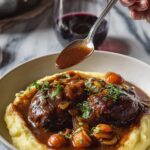
Classic Coq au Vin Recipe
- Prep Time: 15 minutes
- Cook Time: 1 hour 20 minutes
- Total Time: 1 hour 35 minutes
- Yield: 4 servings
- Category: Main Course
- Method: Baking
- Cuisine: French
- Diet: Halal
Description
Coq au Vin is a classic French dish featuring tender chicken braised slowly in red wine with aromatic vegetables, bacon, pearl onions, and mushrooms, resulting in a rich and flavorful one-pot meal perfect for dinner.
Ingredients
Chicken and Seasoning
- 4 bone-in, skin-on chicken thighs
- 4 chicken drumsticks
- Salt and freshly ground black pepper, to taste
- 2 ½ tablespoons vegetable oil
Meat and Vegetables
- 4 ounces lardons or slab bacon, diced
- 1 large yellow onion, chopped
- 2 large carrots, peeled and cut diagonally in 1-inch pieces
- 4 cloves garlic, minced
- 1 tablespoons tomato paste
- 1 tablespoon all-purpose flour
- 8 ounces peeled pearl onions
- 8 ounces cremini mushrooms, sliced
Liquids and Herbs
- 1 bottle (750ml) red wine, preferably a Burgundy or Pinot Noir
- 1 bay leaf
- 5 sprigs fresh thyme, tied with kitchen twine
- 3 cups chicken stock, homemade or store-bought
Fats and Garnish
- 4 tablespoons unsalted butter
- ⅓ cup chopped parsley
Optional Thickener
- Beurre manié: 1 tablespoon flour and 1 tablespoon softened butter
Instructions
- Preheat and Prepare Chicken: Preheat oven to 350ºF. Pat dry the chicken pieces with a paper towel and season generously with salt and pepper. Set aside.
- Cook Bacon: In a large Dutch oven or heavy-bottomed pot, heat 1 teaspoon vegetable oil over medium-high heat. Add the diced lardons or bacon and cook until golden, about 6-8 minutes. Remove with a slotted spoon and reserve, leaving drippings in the pot.
- Brown Chicken: Add more oil if needed, then add chicken pieces without overcrowding the pot. Brown on all sides until golden, about 8-10 minutes. Remove chicken and bacon to a plate and reserve.
- Manage Excess Fat: If the pot has excess fat, drain or wipe off, leaving about 1 tablespoon of drippings and browned bits at the bottom.
- Sauté Vegetables: Lower heat to medium. Add chopped onion and carrots, cooking until onions soften, about 3 minutes. Stir in minced garlic and cook for 1 minute to release aroma.
- Add Tomato Paste and Flour: Stir in tomato paste and cook for 1 minute. Then add flour and cook for another minute to eliminate raw flour taste.
- Deglaze with Wine: Pour in the red wine, add thyme sprigs and bay leaf, scraping browned bits from the pot with a wooden spoon. Cook until wine reduces by half, about 10 minutes, skimming off any foam.
- Add Stock and Simmer: Add chicken stock, season with salt and pepper. Bring to a boil, then return chicken, bacon, and any collected juices to the pot.
- Braise in Oven: Cover and transfer the pot to the oven. Cook for 45 minutes or until chicken is very tender.
- Prepare Pearl Onions and Mushrooms: With about 15 minutes left, heat 1 tablespoon oil and 2 tablespoons butter in a sauté pan over medium-high heat. Add pearl onions with a pinch of salt and brown for 5-8 minutes. Remove and reserve. Add another tablespoon oil and 2 tablespoons butter, sauté mushrooms until browned, about 8-10 minutes. Season with salt and pepper and reserve with pearl onions.
- Finish Sauce: Remove chicken from the pot and tent with foil to keep warm. Discard bay leaf and thyme sprigs. Optional: mix 1 tablespoon softened butter with 1 tablespoon flour to make beurre manié. Return pot to stove over medium-high heat, add beurre manié to thicken sauce if desired, adjusting thickness with additional stock or wine as needed.
- Adjust Seasoning and Add Garnishes: Taste sauce and adjust seasoning. Stir in ¼ cup chopped parsley, reserving remaining parsley to garnish. Add the pearl onions and mushrooms back into the sauce.
- Serve: Either return chicken to the pot and garnish with remaining parsley before serving, or serve chicken in a serving dish and pour the sauce over it, garnishing with parsley.
Notes
- Coq au Vin tastes even better the next day; it can be made 1-2 days ahead and refrigerated after cooling completely.
- Leftovers store well in an airtight container in the fridge for up to 5 days.
- Freeze leftovers for up to 3 months; thaw overnight in the refrigerator before reheating.
- Before reheating, remove any solidified fat from the surface. Reheat gently on the stove over medium-low heat with occasional stirring and adding stock or wine as needed, or in the oven at 350ºF for about 30 minutes.
- Pearl onions can be substituted with small shallots if unavailable, and mushrooms can vary to button mushrooms if preferred.
Nutrition
- Serving Size: 1 serving
- Calories: 550 kcal
- Sugar: 5 g
- Sodium: 750 mg
- Fat: 35 g
- Saturated Fat: 12 g
- Unsaturated Fat: 20 g
- Trans Fat: 0 g
- Carbohydrates: 12 g
- Fiber: 3 g
- Protein: 45 g
- Cholesterol: 150 mg