
Korean Beef Bowl Recipe
If you’re looking for a quick, tasty, and comforting dish that feels a little special, then this Korean Beef Bowl Recipe is going to be your new go-to. I’ve made this a hundred times, and each time it hits the spot with those sweet, savory, and just a tiny kick of spicy flavors. It’s perfect for busy weeknights when you want something hearty but fuss-free—and bonus, it’s super customizable. Stick with me, and I’ll walk you through exactly how to nail it every time.
Why This Recipe Works
- Flavor Balance: The blend of soy sauce, ginger, honey, and rice vinegar creates the perfect balance of sweet, salty, tangy, and umami that Korean flavors are famous for.
- Easy & Fast: Ground beef cooks quickly and the sauce comes together in minutes—ideal when you want dinner on the table pronto.
- Fresh Toppings: Pickled carrots and crisp cucumbers add brightness and crunch that keep every bite exciting.
- Customizable: Whether you want it keto with cauliflower rice or add some heat with extra chili flakes, this recipe is flexible and forgiving.

Ingredients & Why They Work
Each ingredient in the Korean Beef Bowl Recipe plays its part in building those bold, familiar flavors that keep you coming back for more. I always suggest grabbing the freshest scallions and ginger you can find, and don’t overlook the magic of pickling those carrots—it really brightens the whole bowl.

- Lean Ground Beef: Using 93% lean beef keeps it juicy but not greasy, making cleanup easier and the flavor cleaner.
- Soy Sauce: Low sodium is best here so you can control the saltiness without overwhelming the dish.
- Scallions: Both the green and white parts bring fresh onion flavor and a lovely pop of color.
- Garlic: Adds aromatic depth that makes this bowl feel cozy and rich.
- Rice Vinegar: Essential for that mild tang, especially in the pickling and sauce.
- Honey: Just enough sweetness to balance the tang and spice without being cloying.
- Fresh Ginger: Grated fresh ginger brings a bright, zesty warmth that dried ginger just can’t match.
- Red Pepper Flakes: A pinch (or more!) adds a subtle heat that you can tailor to your taste.
- Sesame Oil: Nutty and fragrant, it finishes the dish with that unmistakable Korean flavor punch.
- Carrots & Cucumbers: Fresh or quick-pickled, they provide crunch and a cooling contrast to the savory beef.
- Sesame Seeds: Toasted for extra nuttiness and a pretty garnish that also adds texture.
Tweak to Your Taste
One of the joys of this Korean Beef Bowl Recipe is how easy it is to tweak depending on what you love or what you have on hand. I like to mix up the heat level or swap the rice base to keep things fresh and exciting in my kitchen.
- Heat it up: I once added gochujang (Korean chili paste) to the sauce for a spicy, richer kick that blew everyone away—definitely try if you love heat!
- Rice swaps: Cauliflower rice is a favorite when I’m trying to cut carbs, but quinoa adds a lovely nutty texture and extra protein.
- Veggie power: Add quick pickled radishes or even kimchi to up the probiotic goodness.
Step-by-Step: How I Make Korean Beef Bowl Recipe
Step 1: Brown the Beef with Flavor
Start by heating your skillet over medium-high heat and crumble in your lean ground beef. I find breaking it into tiny pieces helps it brown evenly and soak up the flavors better. When it’s about halfway cooked, sprinkle in a tablespoon of soy sauce and add two-thirds of your minced scallions. This little trick seasons the meat from the get-go and infuses it with onion flavor. Once the beef is fully browned and no longer pink, stir in your minced garlic and let it cook for just 30 seconds—garlic burns fast, so keep a close eye!
Step 2: Whip Up the Sauce & Let It Bubble
While the beef is cooking, mix together the rice vinegar, honey, fresh ginger, red pepper flakes, and the rest of the soy sauce in a small bowl. Pour this sauce mixture over your browned beef and give everything a good stir. Let it cook together for about 2 minutes so the flavors meld and the sauce thickens slightly. This is when your kitchen starts smelling amazing, trust me.
Step 3: Finish with Sesame Oil & Scallions
Turn off the heat and stir in the sesame oil—this boosts that nutty, signature Korean flavor. Sprinkle the rest of the scallions on top for freshness and a pop of color. Taste your beef now and add a bit more soy sauce or red pepper flakes if you want to dial up the saltiness or spice. I often add just a touch more soy sauce here for that perfect balance.
Step 4: Serve & Top Your Bowl
Ladle your saucy beef over a bed of fluffy cooked brown rice, quinoa, or cauliflower rice, depending on what you prefer. Top generously with shredded carrots and thinly sliced cucumbers—if you can, quick pickle them first with a little rice vinegar and sugar for extra zing. Don’t forget a sprinkle of toasted sesame seeds to finish—it’s those little details that take this from everyday to memorable!
Pro Tips for Making Korean Beef Bowl Recipe
- Don’t Overcrowd the Pan: Giving your beef room to brown in the skillet ensures maximum flavor and prevents steaming.
- Fresh Ginger is Key: I learned that fresh ginger makes all the difference over powdered—it brightens the whole dish.
- Quick Pickle for a Crunch: Even 10 minutes of pickling carrots and cucumbers adds that refreshing bite that cuts through the rich beef.
- Taste as You Go: Flavors can vary a lot based on your soy sauce brand, so adjust salt and spice near the end for perfect balance.
How to Serve Korean Beef Bowl Recipe

Garnishes
Whenever I serve this Korean Beef Bowl Recipe, I love topping it with a handful of toasted sesame seeds—they add such a lovely nuttiness and a nice visual touch. Sometimes I’ll sprinkle on some thinly sliced scallions or even a little chopped cilantro for extra freshness. A dollop of kimchi on the side is also a wonderful, authentic touch if you can get your hands on it.
Side Dishes
This bowl stands tall on its own, but for fuller meals, I often pair it with steamed edamame for protein or a simple seaweed salad. If I’m feeling fancy, I’ll make a quick miso soup to start. These sides keep the Korean-inspired theme going and balance the flavors nicely.
Creative Ways to Present
For dinner parties or meal prep shows, I like to assemble my Korean Beef Bowls in glass jars or bento-style containers layered with rice, beef, and pickled veggies for a vibrant colorful presentation. It’s as pleasing to the eye as it is to the taste buds! Adding a cute little drizzle of sriracha or extra sesame oil on top just elevates the look.
Make Ahead and Storage
Storing Leftovers
I keep leftover Korean Beef in airtight containers in the fridge, and it usually stays great for up to 4 days. I store the pickled veggies separately so they stay fresh and crunchy. When it’s time to eat, I just reheat the beef gently—this keeps the texture just right without drying out.
Freezing
If I make a big batch, I portion out the beef mixture (without the fresh toppings) into freezer-safe containers and freeze for up to 3 months. It freezes beautifully and reheats easily after thawing overnight in the fridge. Just add fresh pickled veggies after reheating for that bright contrast.
Reheating
I prefer reheating leftovers in a skillet over medium-low heat to keep all the beef moist and flavorful. You can add a splash of water or a drizzle of soy sauce if it seems dry. Microwave works in a pinch, but stirring halfway through really helps keep it evenly warmed.
FAQs
-
Can I use other meats instead of ground beef for this Korean Beef Bowl Recipe?
Absolutely! Ground turkey or chicken work great as a leaner alternative, though the flavor might be a bit milder so you might want to punch up the seasoning. For a richer taste, thinly sliced ribeye or skirt steak also works if you’re up for more prep.
-
Is this recipe gluten-free?
It can be! Just make sure to use gluten-free soy sauce (like tamari) and double-check that any other add-ins, like rice vinegar or chili flakes, don’t contain gluten. The core recipe itself is naturally gluten-free if you swap the soy sauce.
-
How spicy is this Korean Beef Bowl Recipe?
This recipe has a gentle heat from the red pepper flakes, but it’s super easy to adjust. If you like things spicy, add more red flakes or a spoonful of gochujang. If you prefer mild, just skip or use less chili flakes.
-
Can I make Korean Beef Bowls ahead for meal prep?
Definitely! The beef can be cooked ahead and stored in the fridge for up to 4 days, making it fantastic for weekday lunches or dinners. Keep the pickled veggies separate so they stay fresh and crisp when you’re ready to eat.
Final Thoughts
This Korean Beef Bowl Recipe has become one of those dishes I turn to when I want comfort and flavor but don’t want to fuss in the kitchen. It’s reliable, flavorful, and endlessly adaptable—which is why I hope you’ll make it a staple too. Cooking this for friends always sparks conversations about how fast and tasty it is, so let it be your little delicious secret shared over the dinner table. Give it a go and watch it become a favorite in your home, just like it did in mine.
Print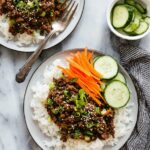
Korean Beef Bowl Recipe
- Prep Time: 10 minutes
- Cook Time: 10 minutes
- Total Time: 20 minutes
- Yield: 4 servings
- Category: Main Course
- Method: Stovetop
- Cuisine: Korean
- Diet: Low Fat
Description
A flavorful Korean Beef Bowl featuring lean ground beef cooked with soy sauce, garlic, ginger, and a touch of sweetness from honey. Served over brown rice with pickled carrots, fresh cucumbers, and toasted sesame seeds for a vibrant and satisfying meal.
Ingredients
For the Beef:
- 1 pound lean ground beef (93% lean)
- 3 tablespoons low sodium soy sauce, divided
- 1 1/4 cups minced scallions (both green and white parts), divided
- 1 tablespoon minced garlic (about 3 cloves)
- 2 tablespoons rice vinegar
- 2 tablespoons honey
- 2 tablespoons minced or finely grated fresh ginger
- 1/4 teaspoon red pepper flakes, plus additional to taste
- 1 tablespoon sesame oil, plus additional to taste
For Serving:
- Cooked brown rice, quinoa, or cauliflower rice
- 1 1/2 cups shredded carrots
- Thinly sliced seedless cucumbers (Persian-style or English/hot house)
- Toasted sesame seeds
For Pickling Vegetables (Optional):
- 2 tablespoons rice vinegar
- 2 tablespoons water
- 1/2 teaspoon sugar
- 1/2 teaspoon kosher salt
Instructions
- Pickle the vegetables: In a medium bowl, combine shredded carrots and cucumbers. Add rice vinegar, water, sugar, and kosher salt. Toss to coat and let marinate for at least 10 minutes while you prepare other ingredients. Drain before serving.
- Brown the beef: Heat a large skillet over medium-high heat. Add ground beef and cook, breaking it into small pieces, until about halfway cooked, approximately 3 minutes.
- Add flavorings to beef: Add 1 tablespoon soy sauce and 2/3 of the minced scallions to the beef. Continue cooking until beef is fully browned and cooked through, about 2 more minutes.
- Add garlic: Stir in minced garlic and cook for 30 seconds until fragrant.
- Prepare sauce: In a small bowl, mix rice vinegar, honey, grated ginger, red pepper flakes, and remaining soy sauce.
- Finish cooking beef: Pour the sauce mixture over the beef in the skillet. Stir well and cook for 2 minutes to combine flavors. Remove from heat and stir in sesame oil.
- Garnish: Sprinkle the remaining scallions over the top of the beef. Taste and adjust seasoning with extra soy sauce or red pepper flakes if desired.
- Serve: Serve the beef hot over cooked brown rice or preferred grain. Top generously with pickled carrots, sliced cucumbers, and toasted sesame seeds.
Notes
- To pickle carrots and cucumbers, marinate them with rice vinegar, water, sugar, and salt for a fresher, tangy flavor that elevates the dish.
- Store leftovers in an airtight container in the refrigerator for up to 4 days.
- Reheat leftovers gently in a skillet over medium-low heat or in the microwave for best results.
- You can freeze the beef mixture and pickled vegetables separately in airtight containers for up to 3 months. Thaw overnight in the refrigerator before reheating.
- For a lower-carb version, serve over cauliflower rice instead of brown rice.
Nutrition
- Serving Size: 1 bowl
- Calories: 350 kcal
- Sugar: 8 g
- Sodium: 600 mg
- Fat: 15 g
- Saturated Fat: 5 g
- Unsaturated Fat: 9 g
- Trans Fat: 0 g
- Carbohydrates: 28 g
- Fiber: 4 g
- Protein: 25 g
- Cholesterol: 70 mg