
Korean Gochujang Meatballs Recipe
If you’ve ever been all about that perfect balance of sweet, spicy, and savory, then you’re going to love this Korean Gochujang Meatballs Recipe. It’s one of those dishes I come back to again and again—not only because it’s simple but because every bite just hits that amazing flavor jackpot. Gochujang gives these meatballs a wonderful kick without being overpowering, and the apricot glaze adds a lovely touch of sweetness that keeps everyone at the table reaching for more. Grab your apron, and let’s dive into making a fan-freaking-tastic meal you’ll want to share and savor!
Why This Recipe Works
- Balanced Flavors: The spicy gochujang and sweet apricot glaze create a mouthwatering contrast that’s addictive.
- Juicy Texture: Using panko and egg keeps the meatballs tender and juicy without being heavy.
- Simple Technique: A quick pan-fry for browning followed by oven baking means even cooking without fuss.
- Versatile Serving: Great as a snack, appetizer, or main—perfect for family meals or parties.

Ingredients & Why They Work
This Korean Gochujang Meatballs Recipe brings together ingredients that complement each other beautifully—each one adding texture, flavor, or moisture. The secret is in balancing the heat from the gochujang with the sweetness of apricot preserves, while fresh ginger and garlic give a punch of aroma you just can’t skip. When you shop, look for fresh green onions and quality ground beef to make the flavors shine.

- Green onions: Use fresh, vibrant stalks thinly sliced for a mild onion crunch inside the meatballs and as garnish.
- Garlic cloves: Freshly minced garlic gives that signature savory punch that makes every bite flavorful.
- Egg: Acts as a binder keeping the meatballs from falling apart while adding richness.
- Panko breadcrumbs: These light breadcrumbs help the meatballs stay tender by absorbing moisture without weighing them down.
- Gochujang (Korean chili paste): The star ingredient—adds spicy depth with a subtle fermented tang.
- Fresh ginger: Grated ginger adds brightness and a little warmth that balances the heat.
- Kosher salt & white pepper: Classic seasoning to bring out all the complex flavors.
- Ground beef: I prefer 80/20 for a juicy texture, but you can swap with pork or turkey if you want.
- Canola oil: Great for pan-frying because it tolerates heat well without a heavy flavor.
- Apricot preserves: Give the glaze a delightful fruity sweetness that pairs perfectly with the spicy gochujang.
- Rice vinegar: Adds just the right acidity to balance the sweet glaze.
- Soy sauce: Brings an umami boost to the glaze for that rounded savory finish.
- Toasted sesame seeds: Final garnish with nutty flavor and a little crunch.
Tweak to Your Taste
I love playing with this Korean Gochujang Meatballs Recipe depending on my mood or what’s in my fridge. Don’t be shy about making it your own—spice it up more, swap proteins, or even make it vegetarian!
- Variation: Once, I swapped half the ground beef for ground pork for extra succulence, and it was heavenly—give it a try if you want a little richness boost.
- Heat level: If you’re new to gochujang, start with a little less and add more as you go; it’s easier to build heat than tone it down.
- Gluten-free option: Swap panko breadcrumbs for gluten-free crumbs or crushed rice crackers to keep the texture light and safe for gluten-sensitive friends.
- Vegetarian twist: Use finely chopped mushrooms or lentils for a meaty texture and season generously.
Step-by-Step: How I Make Korean Gochujang Meatballs Recipe
Step 1: Mix Your Flavor Base
Start by combining your thinly sliced green onions, minced garlic, beaten egg, panko breadcrumbs, gochujang, grated fresh ginger, kosher salt, and white pepper in a large bowl. Give it a good stir—this step wakes up the flavors beautifully before adding the ground beef. I like to use my hands here because it’s easier to blend everything evenly without overworking the meat, which keeps the meatballs tender. Trust me, overmixing is the enemy of juicy meatballs!
Step 2: Form and Brown Those Meatballs
Gently fold in the ground beef until just combined—don’t go crazy stirring. Then, form into golf ball-sized meatballs using your hands or a scoop (I like the size that’s easy to pop in your mouth!). Heat canola oil in a large skillet over medium-high heat and brown the meatballs in batches. This usually takes about 3 to 4 minutes per batch—turn them carefully so they get a nice crust all around. Browning adds so much flavor and locks in juices.
Step 3: Oven Bake to Perfection
After browning, transfer the meatballs to a rimmed baking pan and pop them into a 350°F oven for about 10 minutes. This lets them cook evenly through without drying out. I always check for an internal temperature of 160°F just to be safe, but that 10-minute window works perfectly if you don’t have a thermometer handy.
Step 4: Whip Up the Glaze
While the meatballs are baking, combine the apricot preserves, gochujang, rice vinegar, and soy sauce in a small saucepan. Keep the heat medium and whisk frequently for about 5 minutes until it thickens slightly. You want a glossy glaze that will stick beautifully to the meatballs. This combo of spicy and sweet is what makes the dish so memorable.
Step 5: Glaze & Garnish
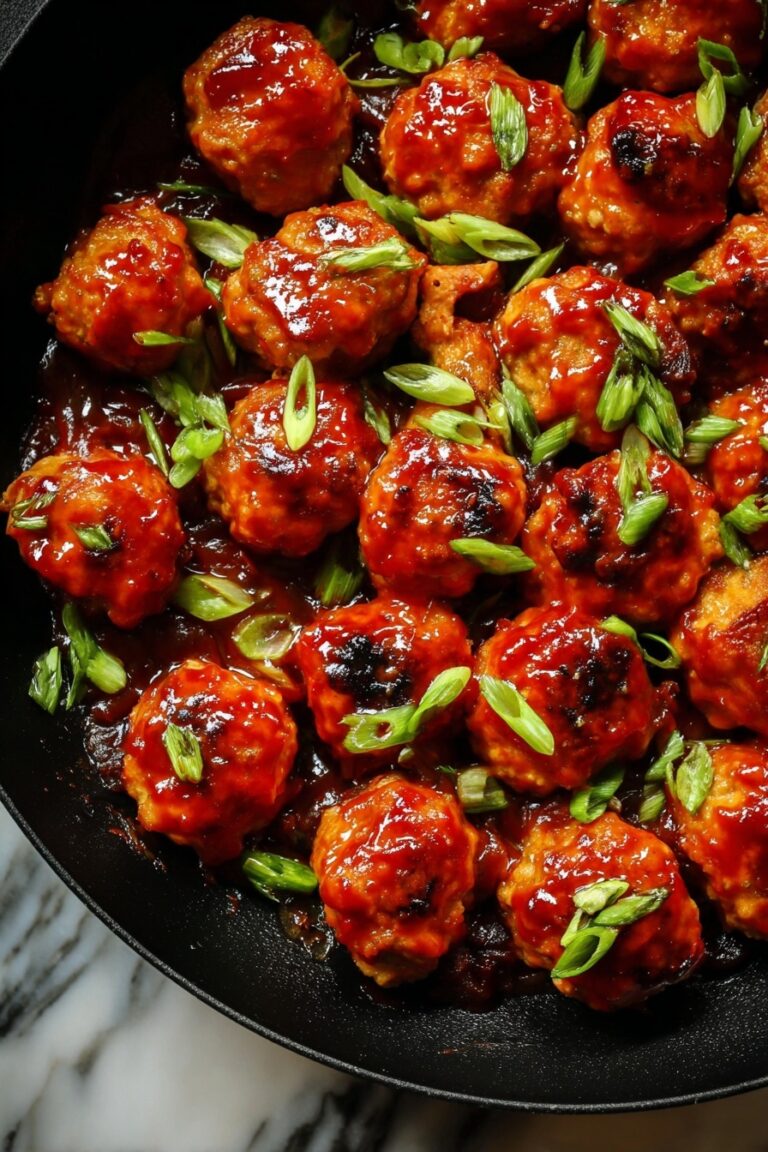
Once your meatballs come out of the oven, brush them generously with your glaze. Then, sprinkle with sliced green onions and toasted sesame seeds for that extra flavor pop and visual appeal. I love this moment—the aroma and color combo always make me smile before I take the first bite.
Pro Tips for Making Korean Gochujang Meatballs Recipe
- Don’t Overmix: Mixing the meat too much makes meatballs dense; gently fold instead to keep them tender.
- Browning is Key: Never skip pan-frying first—it builds flavor and helps seal in the juices.
- Glaze Thickness: Let your glaze thicken slightly but don’t overcook or it’ll harden; it should be spreadable and shiny.
- Size Matters: Aim for uniform golf ball size so they cook evenly in the oven.
How to Serve Korean Gochujang Meatballs Recipe

Garnishes
I can’t resist topping these meatballs with extra sliced green onions and toasted sesame seeds—the fresh pop of green and the nutty crunch just completes the whole experience. Sometimes I add a sprinkle of crushed peanuts for a little extra texture or grab some fresh cilantro to sprinkle on top if I’m feeling fancy.
Side Dishes
My go-to side is steamed jasmine rice or sticky rice, which soaks up all the glaze drips perfectly. For something fresh, I throw together a quick cucumber salad with rice vinegar and chili flakes to cut through the richness. Roasted broccoli or sautéed bok choy also make delicious, colorful companions.
Creative Ways to Present
For a party, I like to serve these meatballs on skewers with extra glaze on the side for dipping—makes it easy to grab and eat while mingling. Another fun way is to pile them into a slider bun with lettuce and a smear of mayo for a Korean-inspired twist on a meatball sub. Trust me, your guests will notice and keep coming back.
Make Ahead and Storage
Storing Leftovers
I store any leftover Korean Gochujang Meatballs Recipe in an airtight container in the fridge for up to 3 days. The flavors even deepen a bit as they rest, so leftovers taste just as good—if not better! Just keep the glaze separate if you want to keep the meatballs from getting soggy.
Freezing
These meatballs freeze beautifully. I usually flash freeze them on a baking sheet first to prevent sticking, then transfer to a freezer bag for up to 2 months. When you’re ready, just thaw overnight in the fridge or cook from frozen—either baked or gently reheated on the stovetop works great.
Reheating
To keep the meatballs moist when reheating, I pop them into a 350°F oven covered with foil for about 10 minutes. Alternatively, you can warm them gently on the stovetop with a splash of water or extra glaze to keep them saucy. Microwave works too if you’re short on time—just cover to trap steam.
FAQs
-
Can I make these meatballs with ground chicken or turkey?
Absolutely! Ground chicken or turkey works well if you prefer a leaner option—just watch closely while cooking since they can dry out faster. Adding a little extra panko or a splash of broth to the mixture helps keep the meatballs juicy.
-
What if I can’t find gochujang?
Gochujang is key for that authentic Korean kick, but if you’re stuck, you can try mixing miso paste with a bit of chili paste or hot sauce as a substitute. It won’t be exactly the same, but it’ll give you a nice umami heat.
-
How spicy are these meatballs?
They have a moderate heat level thanks to the gochujang—it’s more of a flavorful warmth than fiery spice. You can adjust by adding less chili paste if you want mild or more if you love heat. The apricot glaze also helps tone down the spiciness.
-
Can I prepare these meatballs ahead of time?
Yes! You can mix and form the meatballs a few hours in advance and keep them covered in the fridge until ready to cook. The flavors actually develop nicely when given a little time.
Final Thoughts
I have to say, this Korean Gochujang Meatballs Recipe holds a special place in my kitchen. It’s one of those recipes that’s approachable for weeknights but impressive enough for entertaining. Bringing together familiar ingredients into a surprisingly bold, satisfying dish is part of why I keep it in my meal rotation. You’ll love how easy it is to make, and I’m sure it’ll become a new favorite in your house too. Go on, try it out and watch how fast it disappears—your taste buds are in for a treat!
Print
Korean Gochujang Meatballs Recipe
- Prep Time: 25 minutes
- Cook Time: 30 minutes
- Total Time: 55 minutes
- Yield: 4 servings
- Category: Appetizer
- Method: Frying
- Cuisine: Korean
Description
These Korean Style Meatballs feature a flavorful blend of ground beef, aromatic ginger, garlic, and green onions, seasoned with gochujang chili paste. Pan-fried for a crispy exterior and finished in the oven, they are glazed with a sweet and tangy apricot and gochujang sauce, then garnished with sesame seeds and sliced green onions, making a perfect appetizer or main dish with a Korean twist.
Ingredients
For the Meatballs:
- 3 green onions very thinly sliced
- 2 garlic cloves minced
- 1 egg lightly beaten
- ½ cup panko breadcrumbs
- 2 tablespoons gochujang Korean chili paste
- 1 tablespoon minced fresh ginger
- 1 teaspoon kosher salt
- ½ teaspoon ground white pepper
- 1 pound ground beef
- 2 tablespoons canola oil for pan-frying
For the Glaze:
- ⅓ cup apricot preserves
- 2 tablespoons gochujang Korean chili paste
- 1 ½ tablespoons rice vinegar
- 1 tablespoon soy sauce
For the Garnish:
- Sliced green onion
- Toasted sesame seeds
Instructions
- Make the Meatballs: Preheat oven to 350 degrees F. In a large bowl, stir together the sliced green onions, minced garlic, beaten egg, panko breadcrumbs, gochujang, minced ginger, kosher salt, and ground white pepper. Add the ground beef and mix gently by hand or with a spoon until just combined without overmixing. Form the mixture into golf ball-sized meatballs.
- Brown the Meatballs: Heat canola oil in a large skillet over medium-high heat. In batches, add the meatballs to the skillet and cook for 3 to 4 minutes, turning occasionally, until they are browned on all sides. Transfer the browned meatballs to a rimmed baking pan.
- Bake the Meatballs: Place the baking pan with meatballs into the preheated oven and bake for 10 minutes or until the internal temperature reaches 160 degrees F, ensuring they are fully cooked.
- Make the Glaze: While the meatballs bake, whisk together apricot preserves, gochujang, rice vinegar, and soy sauce in a small saucepot. Cook over medium heat, stirring frequently, for 5 minutes or until the glaze slightly thickens.
- Glaze and Garnish: Remove the meatballs from the oven and brush them generously with the prepared glaze. Sprinkle with sliced green onions and toasted sesame seeds before serving.
Notes
- Do not overmix the meatball mixture to keep the meatballs tender and juicy.
- If you prefer a spicier glaze, add extra gochujang to taste.
- For a gluten-free version, substitute panko breadcrumbs with gluten-free breadcrumbs and use gluten-free soy sauce.
- If apricot preserves are unavailable, peach or orange marmalade can be used as a substitute.
- Use a meat thermometer to ensure the meatballs reach a safe internal temperature of 160 degrees F.
- Leftover meatballs can be refrigerated and reheated gently to maintain moisture.
Nutrition
- Serving Size: 1 serving
- Calories: 320 kcal
- Sugar: 10 g
- Sodium: 450 mg
- Fat: 18 g
- Saturated Fat: 6 g
- Unsaturated Fat: 10 g
- Trans Fat: 0 g
- Carbohydrates: 20 g
- Fiber: 1 g
- Protein: 20 g
- Cholesterol: 80 mg